Tuesday, November 24, 2009

It's been awhile

Sorry I’ve been neglecting my blogs. John is visiting his extended family in Indiana for the holiday and between doing the chores and everyday upkeep and chipping away at Have a Cow and my Hobby Farms assignments, blogging completely slipped my mind.

BUT, here is my big news: I got the go-ahead from Storey to submit a proposal for Feeling Sheepish! To say I’m thrilled is an understatement. I began working on the proposal yesterday and am having the time of my life.

Much as I adore goats, I honestly prefer researching sheep. It’s the history, you see. Goats were domesticated before sheep by perhaps one to two thousand years, but because humans utilized wool even before domestication (they picked shed undercoat out of bushes and such), sheep and humans go way, way back.

And, sheep are just plain interesting creatures. Studying their behavior is fascinating stuff. Take Mopple, who despite being raised with Edmund, still prefers to hang out days with the sheep.


Old Angel, who was fostered on a doe is quite the opposite; she reluctantly spends her nights in the sheep fold (we can’t let her overnight with the goats lest she ingest too much copper from their mineral tubs) but she joins the goats the moment she’s let out for the day. Last month she marched past five rams to hang out by Martok’s buck run when she was in heat. He had a visiting girlfriend and paid her no mind; as you see, she seemed quite depressed.

This proposal gives me an excuse to add items to my sheep ephemera collection too, though I already have a fat photo album of goodies if the book is a go. The picture at the top of this entry is one of my favorites, taken around the turn of the century in Burra, a former mining and pastoral town in South Australia (read about Burra here: http://en.wikipedia.org/wiki/Burra,_South_Australia and here: www.southaustralianhistory.com.au/burra.htm). Don’t you wish you knew the story behind this image? I’ve tried to find out, but no luck so far.

Wednesday, November 11, 2009

Too many irons in the fire

Sorry I haven’t posted lately. It seems as though I’m going a dozen different directions at once these days and apart from ongoing leading lessons for Mopple and all the young goats, none of it has to do with training animals.

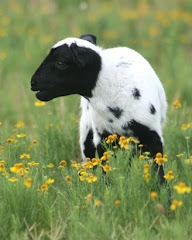
I did something stupid this week. With the economy so slow, I decided I’d breed only two of my little ewes this year rather than be overrun with lambs. I noticed old Rebaa (Coates Farm’s Rosy Lolita) in heat and lounging by Ramsgate 2 (that’s our rams’ pasture; Ramsgate is the pen they had when we had just three rams). So, on a whim, I asked John to help me round up Rebaa, Shebaa (Rebaa’s daughter, Wolf Moon Findabar, one of my best ewes), and Maxx (Wolf Moon Fin Bheara [pictured above], our young paint Miniature/Classic Cheviot ram) and put them in a breeding pen.

I hadn’t planned to breed Rebaa again since I thought she would be ten in March (I didn’t breed her due to her age last year either), but she’s such a wonderful producer that I thought why not? We’ll baby her a bit and she’ll be just fine. I asked her to please have two nice ewe lambs and Maxx bred her right away.

Later that evening I dug out her papers to check her age. I thought perhaps she was going to be nine instead of ten. But she’ll be eleven on March 22! I’ve really lost track of passing time. She’s in great shape but we’ll take her directly from the breeding pen to the elder sheep paddock so she gets extra TLC from start to finish.

Rebaa always has twins or triplets and for her past three lambings she’s picked out one for me to raise (the white sheep is Baa Baa Louie, the wethered son I raised in 2008). She looks them over for about an hour, decides which one is mine, then starts gently nudging it away. If I don’t take the hint and remove that lamb (which I didn’t, the first time this happened), she gets tougher until baby is bouncing off the sides of the lambing jug. Why does she do it? I honestly think she knows I love bottle lambs and wants to share. Sheep are amazingly astute!

Saturday, October 31, 2009

The sun!

Finally, sunshine! Everything is awfully soggy but we got outdoors and the animals loved it. Here’s an update picture of Mopple I took while he was grazing—not a good one but it shows his new, woolly coat.

The goats were in especially high spirits today. A bunch of does came in heat and lounged around Martok’s pen all day making goo-goo eyes while he blubbered and whooped and strutted. The poor guy’s nose is chapped from peeing on himself so much. It must be a strange life, being a buck goat!

Today I let Bon Bon’s twins, Curzon and Jadzia, out with the others to see if weaning finally took. After the first month’s separation, Bon Bon let them pick up nursing exactly where they let off. Not this time; she was having none of it, so unless they pester her so much this evening that she lets down her resolve, they’re back with Bon Bon and Latifah in the dairy shelter for good.

I shot this picture of Jadzia and one of my little Cheviot wethers (Baaxter) today. Jadzia is doing her “let’s smash our heads together” warm-up dance while a bemused Baaxter thinks, “What is wrong with this loony goat?”

Only seconds after I pressed the shutter, he took a few quick steps back and then charged and whacked her.

She stalked away in a huff, muttering that “stupid sheep don’t play fair, they smash before dancing!”

Thursday, October 29, 2009

A peek at Ancon sheep

Since it’s raining buckets yet again today and I’m not spending much time outdoors training sheep and goats, I thought I'd post this sheepy excerpt from my upcoming Storey book, Storey’s Guide to Raising Miniature Livestock. The photo is from Life magazine, 1947.

Enjoy!

Ancon Sheep—a Cautionary Tale

“In 1791, so it seems, a Massachusetts farmer named Seth Wright owned a flock of fifteen ewes and a ram of the ordinary kind. These sheep, as sheep are wont to do, were fond of leaping over the stone walls that fenced them in. Once out on their own, they raided Wright’s neighbors’ fields. So, imagine Farmer Wright’s surprise (and delight) when one of his ewes produced a most uncommon ram lamb, long of body and incredibly short of leg. Sheep like this, Wright correctly deduced, could not jump over stone fences

“So, Farmer Wright culled his normal ram, the short-legged ram’s sire, and bred the short-legged ram to his flock of ewes. The first year only two short-legged lambs were born. However, when he began breeding short-legged to short-legged sheep, the animals began to reliably reproduce their kind. And thus the Otter (later to be known as Ancon) breed of sheep was born.

“Charles Darwin considered Ancon sheep a perfect example of macroevolution. In Origin of Species, first published in 1859, he referred to the Ancon thus, 'It is a rare thing for a striking variety to spring as suddenly as this into existence, and it is singular that the peculiarity should be preserved unmixed in the cross or half-breed; but in other respects it is common-place enough and only represents what men do every day with their cattle, poultry, horses and dogs, and what is done by every nursery gardener in rearing plants. Whenever a breeder sees any peculiarity appear amongst his animals which he considers valuable, he carefully preserves the individual that shows it, and by pairing it with other individuals that manifest a tendency towards it, and selecting such of the offspring as have most perfectly inherited it, he succeeds in perpetuating and greatly improving it.'

“But was it an improvement? Ancons were achondroplastic dwarfs, a type of genetic dwarfism characterized by slow limb growth relative to the rest of the skeleton. Their condition was caused by a mutation that results in the failure of the cartilage between their joints to develop. Numerous other abnormalities existed, including abnormal spines and skulls, flabby subscapular (deep shoulder) muscles, loose leg joint articulations, and badly deviated inward forelegs. Adult Ancons were clumsy cripples that could neither run nor jump like other sheep; that they suffered from crippling arthritis is a given. The breed had so many major health problems that it became extinct decades ago.

“So as the adage goes, ‘It’s not nice to fool Mother Nature’. Should cute, mutated dwarfs happen along, it’s wise to choose not to propagate them. There are scores of breeds of small and miniature livestock available for producers and hobbyists to raise. Let’s do our best to raise animals that enjoy good quality of life.”

Sunday, October 25, 2009

More sheepy this 'n that

Here's another tidbit of sheepiana I've collected. It's a tale from Folk Stories from Southern Nigeria, a book published in 1910.

The sheep to the right is Lori Olson's Wooby (Misty Glyn Gwyn ap Nuad), a Miniature Cheviot ram who is living with us until Lori gets another farm. Wooby is a paternal half-brother to our first ram, Abram (Wolf Moon Finvarra), who sired our present ram, Rumbler (Wolf Moon Rumbler) and quite a few of our ewes.

Sheep Tales ~ The Story of Lightning and Thunder

In the olden days the thunder and lightning lived on the earth amongst all the other people, but the king made them live at the far end of the town, as far as possible from other people's houses.

The thunder was an old mother sheep, and the lightning was her son, a ram. Whenever the ram got angry he used to go about and burn houses and knock down trees; he even did damage on the farms, and sometimes killed people. Whenever the lightning did these things, his mother used to call out to him in a very loud voice to stop and not to do any more damage; but the lightning did not care in the least for what his mother said, and when he was in a bad temper used to do a very large amount of damage. At last the people could not stand it any longer, and complained to the king.

So the king made a special order that the sheep (Thunder) and her son, the ram (Lightning), should leave the town and live in the far bush. This did not do much good, as when the ram got angry he still burnt the forest, and the flames sometimes spread to the farms and consumed them.

So the people complained again, and the king banished both the lightning and the thunder from the earth and made them live in the sky, where they could not cause so much destruction. Ever since, when the lightning is angry, he commits damage as before, but you can hear his mother, the thunder, rebuking him and telling him to stop. Sometimes, however, when the mother has gone away some distance from her naughty son, you can still see that he is angry and is doing damage, but his mother's voice cannot be heard.


- Elphinstone Dayrell, Folk Stories From Southern Nigeria (1910)